Fewer Pills, Better Access to Treatment

For many people, visiting a doctor is a routine matter. But for those who can no longer leave their homes independently because of their health, even essential medical care can become out of reach.

This challenge is particularly acute in remote villages. Transport links are limited, relatives are not always able to help, and chronic conditions cannot wait until a patient finds a way to reach a healthcare facility. As a result, people may follow outdated treatment plans for years, spend a significant share of their income on medicines, or stop taking some of the medications they need altogether.

This is why home visits are an integral part of our mobile clinic’s work.

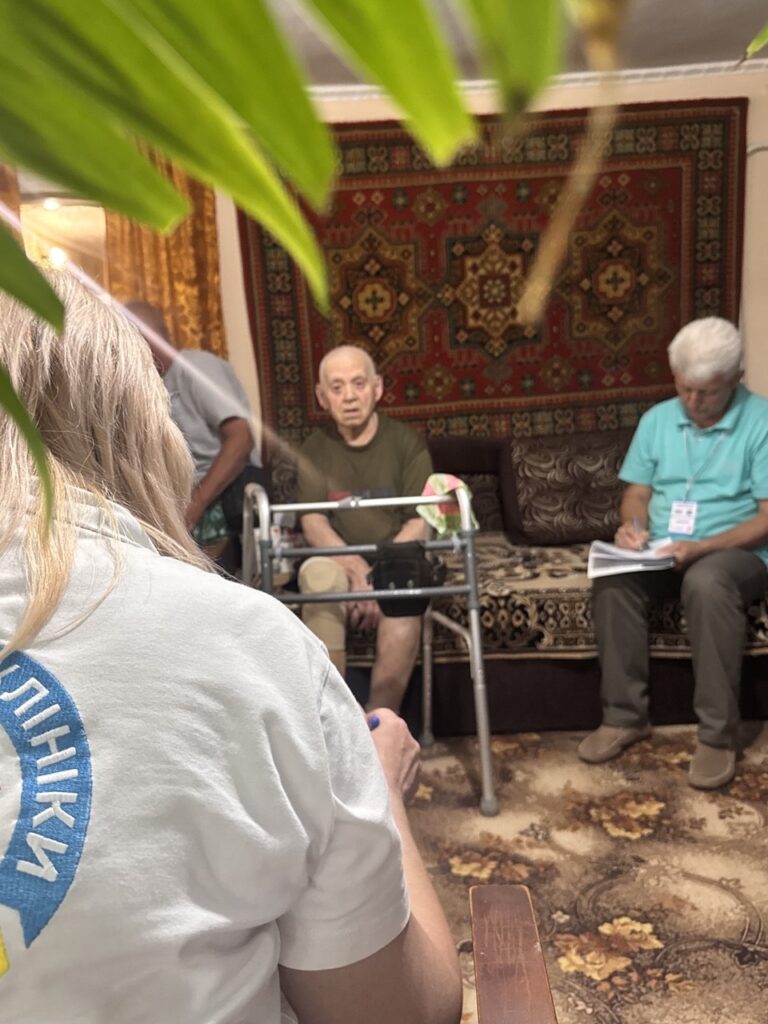
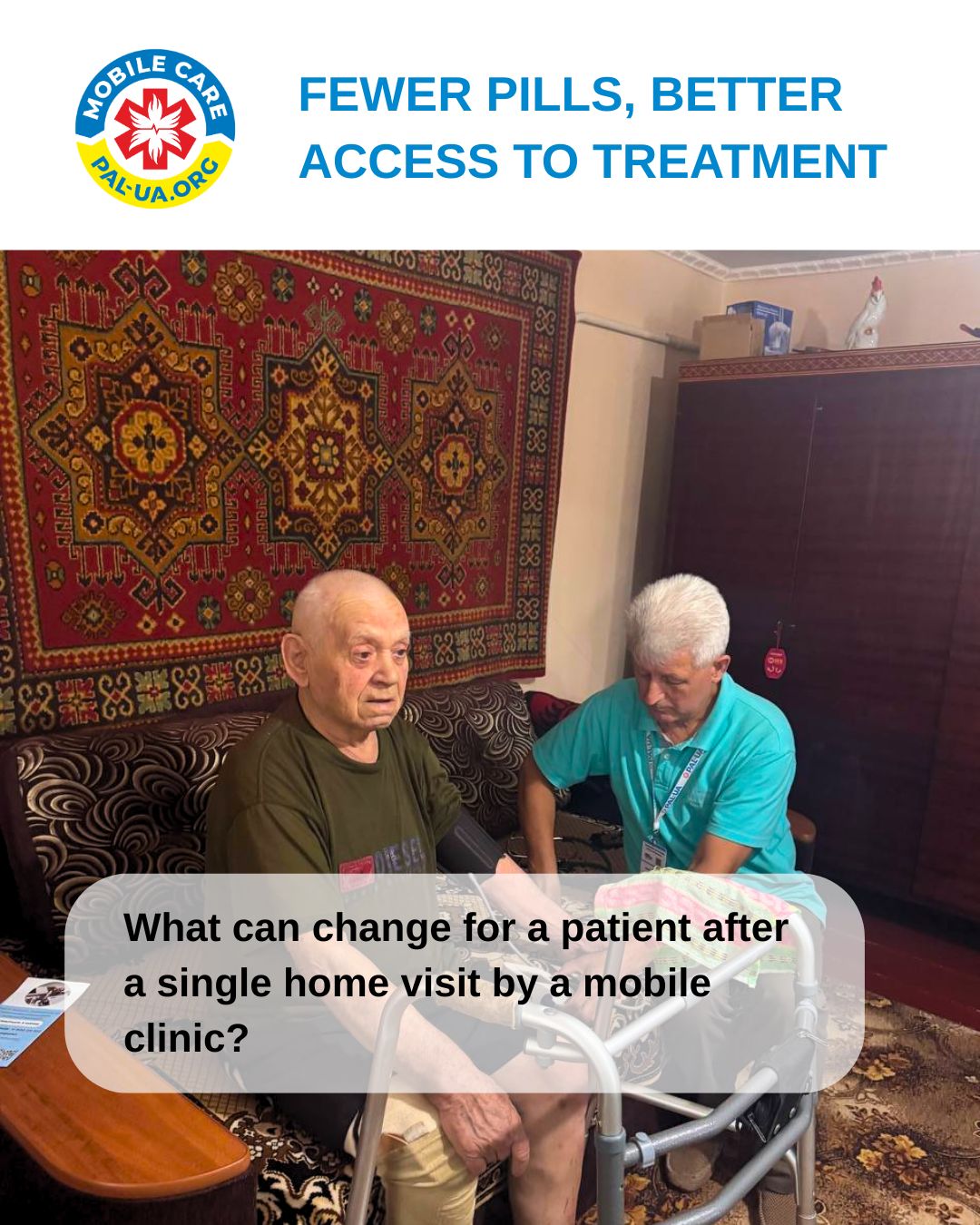
During one such visit, our team and a cardiologist travelled to the home of a patient with limited mobility in a remote village in Mykolaiv Oblast. He is cared for by his wife, who is also responsible for purchasing his medicines and making sure he takes them on time.

During the consultation, the doctor did more than measure the patient’s blood pressure and listen to his concerns. Most importantly, he carefully reviewed the patient’s treatment plan.

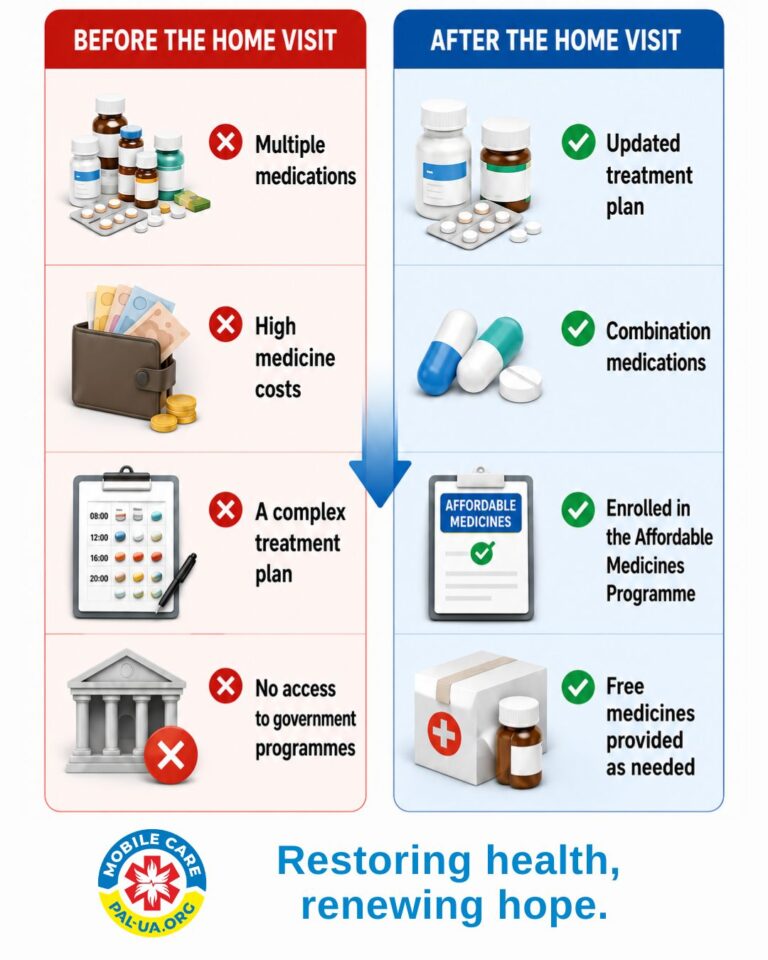
The patient had been taking a large number of medications. The cardiologist assessed each prescription, explained which medicines should be continued and which could be replaced, and selected combined medications where appropriate. This made the treatment plan easier to follow and reduced the number of tablets the patient needed to take each day.

The cost of treatment was another critical issue. Previously, the family had been spending almost the entire pension on essential medicines. The opportunity to receive some of these medications through Ukraine’s state-funded Affordable Medicines Programme therefore became more than just a way to save money. It gave the family a genuine chance to continue treatment without having to choose between medicines and other basic needs.

Our team helped the family obtain the necessary medications through the programme. As a result, their treatment expenses decreased severalfold.

For many people living in remote communities, the main barrier is not the absence of a state programme, but a lack of information, support, or the physical ability to access it. This is why we support patients throughout the entire process—from a medical consultation to actually receiving the medicines they need.

The patient also received free medications that were available from the mobile clinic’s humanitarian stock.

We believe that humanitarian assistance should not duplicate existing public healthcare mechanisms, but complement them. When supporting patients with medicines, our team therefore considers the current list of medications covered by the Affordable Medicines Programme and first helps patients access the support already available through the state system.

Medicines from humanitarian supplies are provided according to medical indications and the patient’s actual needs. This approach allows us to use donor-funded resources responsibly and direct them to the people and situations where they are truly needed.

This is what effective assistance means to us: not simply providing medicines for today, but helping ensure that a person can continue receiving the treatment they need in the future.

Because healthcare becomes truly accessible only when a patient receives not only a consultation, but also a realistic opportunity to follow the doctor’s recommendations—regardless of where they live or whether they are able to leave their home independently.

© 2024 PAL-UA