
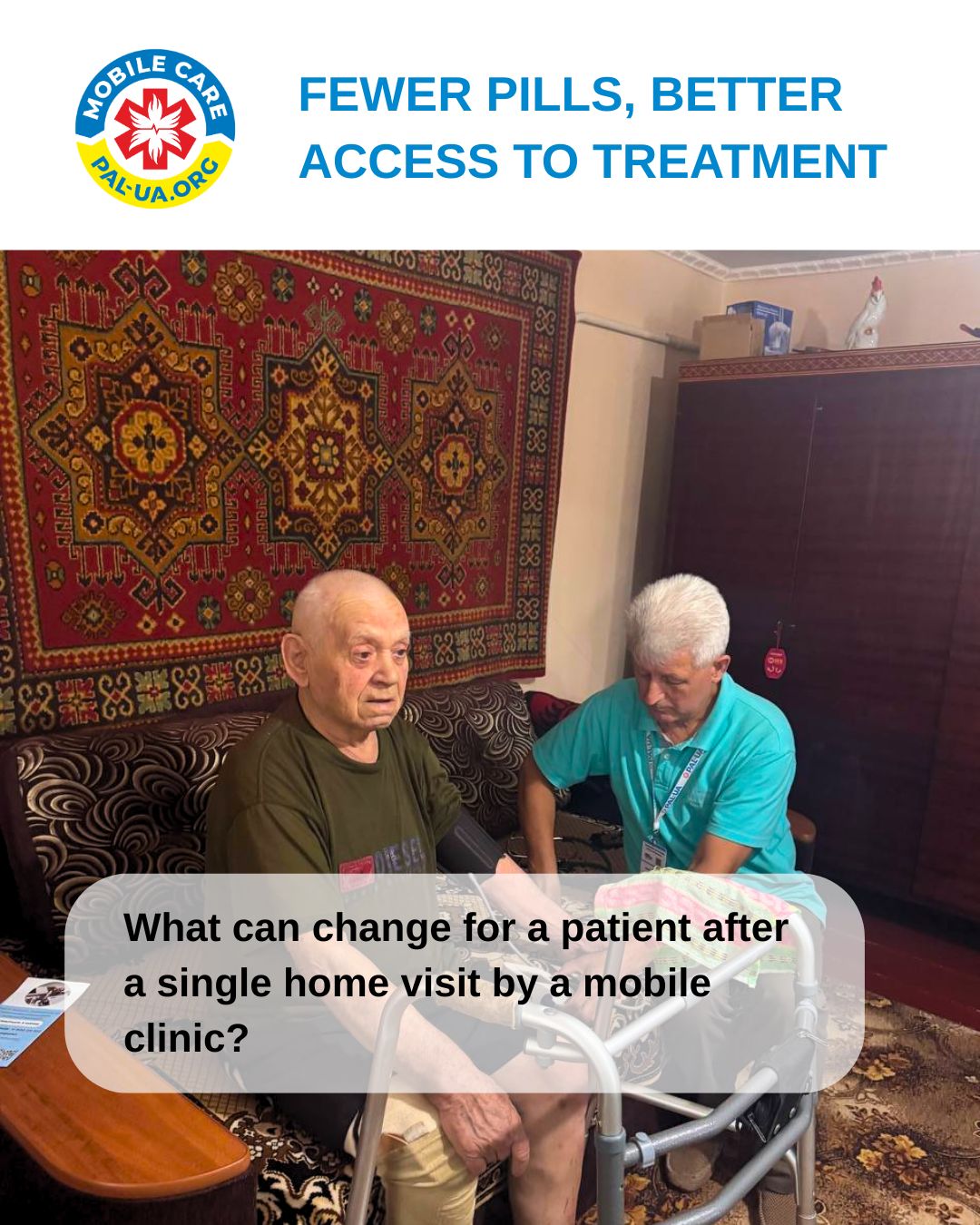
For many people, visiting a doctor is a routine matter. But for those who can no longer leave their homes independently because of their health, even essential medical care can become out of reach. This challenge is particularly acute in remote villages. Transport links are limited, relatives are not always able to help, and chronic conditions cannot wait until a patient finds a way to reach a healthcare facility. As a result, people may follow outdated treatment plans for years, spend a significant share of their income on medicines, or stop taking some of the medications they need altogether. This is why home visits are an integral part of our mobile clinic’s work. During one such visit, our team and a cardiologist travelled to the home of a patient with limited mobility in a remote village in Mykolaiv Oblast. He is cared for by his wife, who is also responsible for purchasing his medicines and making sure he takes them on time. During the consultation, the doctor did more than measure the patient’s blood pressure and listen to his concerns. Most importantly, he carefully reviewed the patient’s treatment plan. The patient had been taking a large number of medications. The cardiologist assessed each prescription, explained which medicines should be continued and which could be replaced, and selected combined medications where appropriate. This made the treatment plan easier to follow and reduced the number of tablets the patient needed to take each day. The cost of treatment was another critical issue. Previously, the family had been spending almost the entire pension on essential medicines. The opportunity to receive some of these medications through Ukraine’s state-funded Affordable Medicines Programme therefore became more than just a way to save money. It gave the family a genuine chance to continue treatment without having to choose between medicines and other basic needs. Our team helped the family obtain the necessary medications through the programme. As a result, their treatment expenses decreased severalfold. For many people living in remote communities, the main barrier is not the absence of a state programme, but a lack of information, support, or the physical ability to access it. This is why we support patients throughout the entire process—from a medical consultation to actually receiving the medicines they need. The patient also received free medications that were available from the mobile clinic’s humanitarian stock. We believe that humanitarian assistance should not duplicate existing public healthcare mechanisms, but complement them. When supporting patients with medicines, our team therefore considers the current list of medications covered by the Affordable Medicines Programme and first helps patients access the support already available through the state system. Medicines from humanitarian supplies are provided according to medical indications and the patient’s actual needs. This approach allows us to use donor-funded resources responsibly and direct them to the people and situations where they are truly needed. This is what effective assistance means to us: not simply providing medicines for today, but helping ensure that a person can continue receiving the treatment they need in the future. Because healthcare becomes truly accessible only when a patient receives not only a consultation, but also a realistic opportunity to follow the doctor’s recommendations—regardless of where they live or whether they are able to leave their home independently.
Bringing Healthcare Closer to Communities: Mobile Clinic Results for July
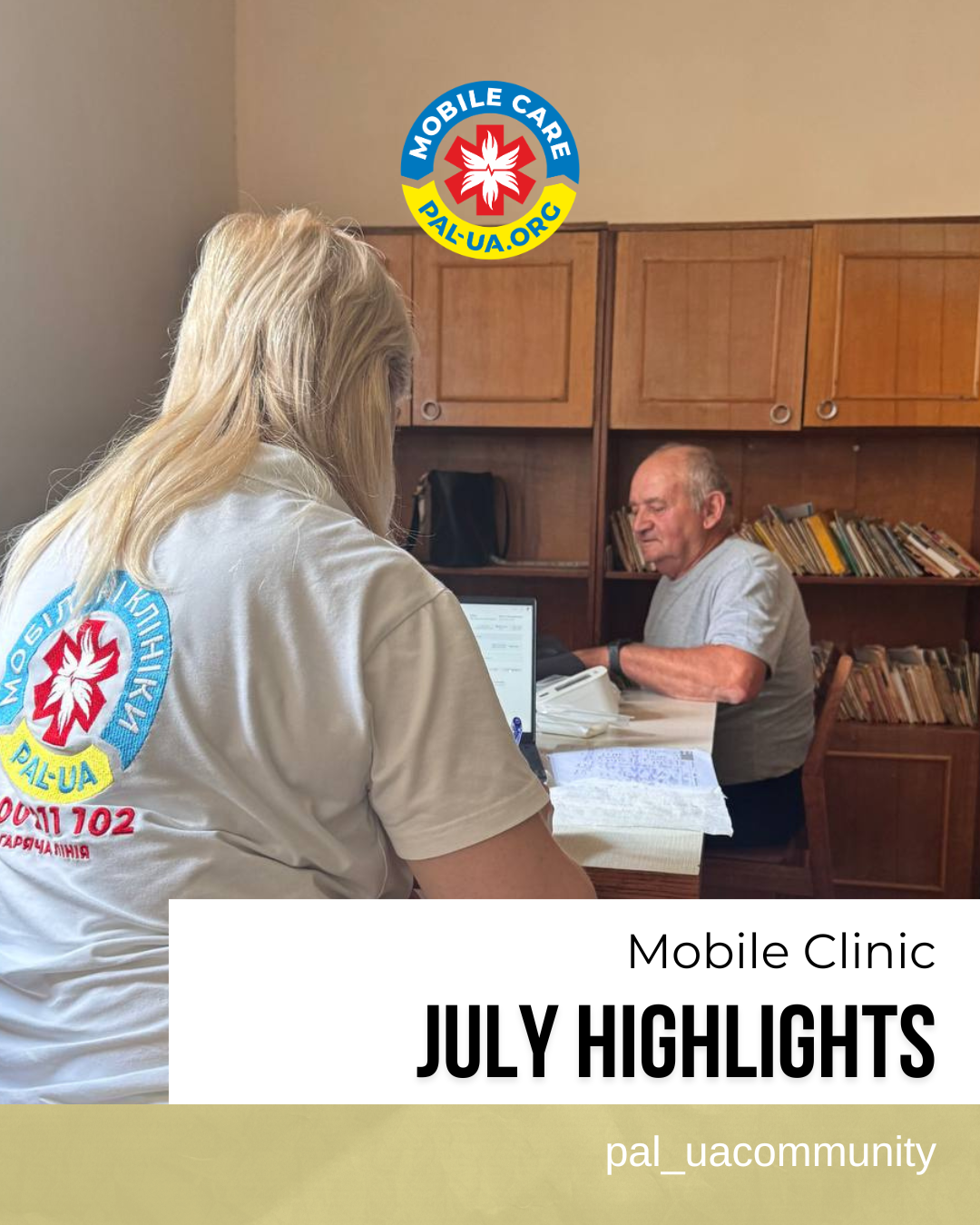
In July, the mobile clinic team of the PAL-UA continued travelling to remote communities across Mykolaiv Oblast, where access to healthcare and psychological support remains limited. Over the course of the month, the team visited 22 communities. Family doctors, psychologists and medical specialists provided consultations, basic health screenings and recommendations for further treatment. During the visits, the medical team provided: blood pressure measurements; blood glucose, cholesterol and uric acid testing; electrocardiograms (ECGs); reviews and adjustments of treatment plans; electronic prescriptions; information about the government’s Affordable Medicines programme; referrals to specialists and healthcare facilities. For many residents of remote villages, a mobile clinic visit is one of the few opportunities to receive medical care without having to travel dozens of kilometres. Limited public transport, health conditions and financial constraints often cause people to postpone seeking medical attention or continue following outdated treatment plans for years. That is why the team’s work goes beyond medical consultations. An equally important part is ensuring that patients clearly understand their doctors’ recommendations, including how to take their medication, manage chronic conditions and recognise when specialised care is needed. Home Visits for People with Limited Mobility In June, the team conducted 10 home visits for people who were unable to reach the mobile clinic due to their health conditions. During these visits, a doctor examines the patient, assesses their overall health, reviews previously prescribed treatment and provides further recommendations. When necessary, the team also helps arrange referrals or order medicines for home delivery. Home visits enable the team to reach those who are most at risk of being left without access to essential healthcare services. Affordable Medicines and Medication Delivery The team continued raising awareness about the Affordable Medicines programme and the option of ordering medication for delivery through Ukrposhta, Ukraine’s national postal service. For some patients, this information was entirely new, even though they had been paying for essential medicines out of pocket for several years. Mobile clinic staff helped them understand how electronic prescriptions work, check whether their medicines were available under the programme and place delivery orders. Psychological Support for Children and Adults Alongside medical consultations, the mobile clinic’s psychologists provided individual support and facilitated group sessions. During these sessions, participants learned to better recognise their emotions, cope with stress, reduce tension and identify sources of inner resilience. Children took part in creative and interactive activities designed to help them express their feelings, connect with their peers and feel safer.
___________________________________
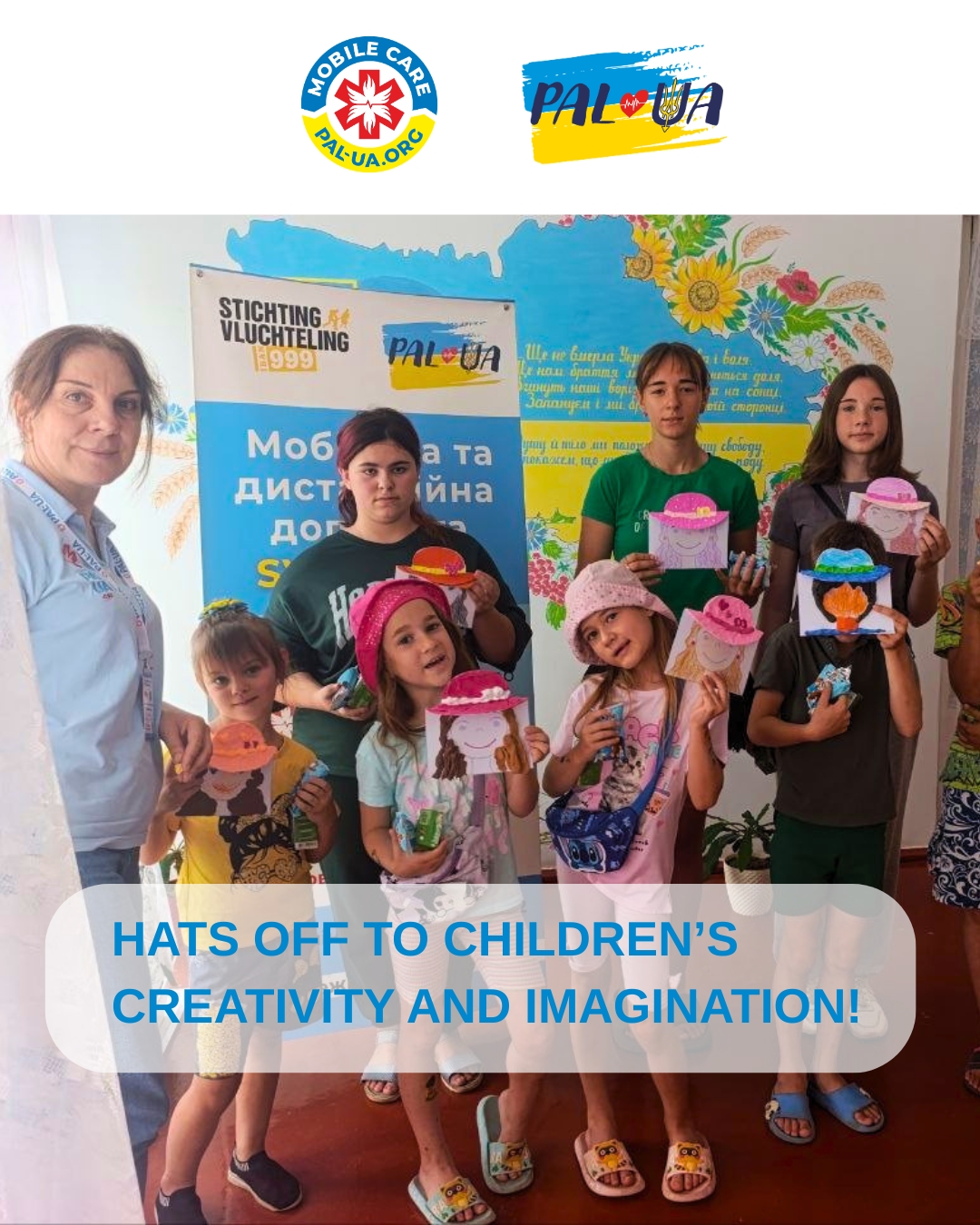
«Hats off to children’s creativity and imagination!» –Once we saw the magical hats the children had created, there was simply no better way to put it. This was our first session with children at a new location. The group brought together children of different ages, many of whom had never met before. To create a welcoming and comfortable atmosphere, our psychologist began with a few icebreaker activities. These helped the children get to know one another, feel more at ease, and gradually engage in the group. They then moved on to the creative part of the session, “My Magic Hat: Expressing Myself Through Creativity.” Our psychologist adapted the activity so that every child could participate, express themselves, and feel comfortable. Creating together also helped the children discover shared interests and begin interacting with one another. As they shaped their magical hats from modelling clay, the children also explored their emotions and feelings. The creative process helped them focus, ease tension, feel calmer, and express their emotions in a safe way. Every hat turned out to be unique—bright, mysterious, playful, or dreamy, just like the young artist who created it. We continue creating safe spaces for children—spaces filled with creativity, friendship, sincere emotions, and childhood dreams!